
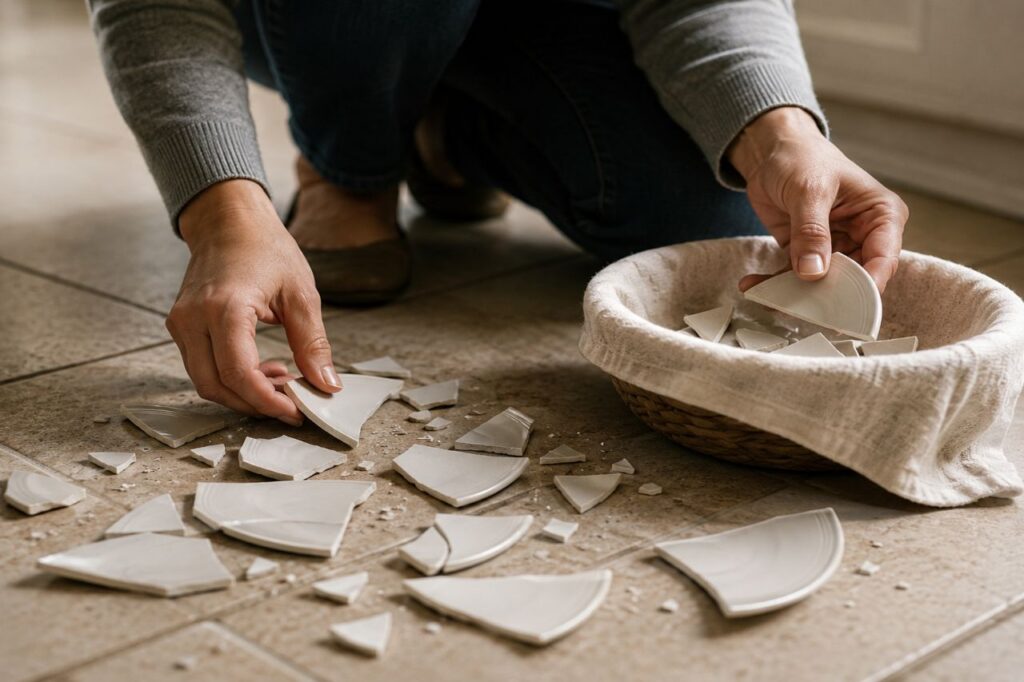
When I was growing up, whenever something fell in the house and made a sound, my mom would yell, “Save the pieces.” As an impressionable youngster, I started repeating the same expression when something fell, not knowing the reason behind these words.
One day, I decided to ask her why she said those words. She explained that it was advice, because if all the pieces are saved, there is an opportunity to put the broken item back together. What optimism!
We are in a world where many things are breaking: marriages, families, churches, and communities. Long-standing relationships are fracturing due to life’s circumstances and pressures. When these breakups happen, there is pain, hurt, loss, and suffering. Consequently, there is an instinctive response to grab the broom, sweep all the broken pieces into the dustpan, and throw them into the trash, never to be seen again.
However, what would happen if the response was to ‘save the pieces’ with the goal of recovery and restoration?
God is a God of redemption, recovery, and restoration. From the very beginning, when sin caused a broken relationship between God and man, God’s redemption and recovery plan has been in motion. It is great to know that we as human beings are not discarded because we fall and break. The goal is restoration.
Sometimes, breakups seem irreversible and irreparable. However, we would be better served if our mindset was to salvage and preserve each other’s dignity instead of resorting to further aggression, hostility, and division.
Paul and Barnabas, two great men of God, experienced a bitter breakup while on a missionary journey over a contentious disagreement. Yet, the Bible records that later on, Paul had a change of heart, and a broken relationship was restored and deemed valuable.
Romans 12 admonishes in verses 10 and 12: “Be kindly affectioned one to another with brotherly love; in honour preferring one another; If it be possible, as much as lieth in you, live peaceably with all men.”
Ultimately, relationships are what really matter in life. While circumstances will inevitably lead to changes and separation, our attitude and approach make a difference in the healing process.
Hence, let it be that we lean towards recovery and restoration as opposed to antagonizing and attacking. In other words, “Save the pieces!”